
ThemeForest vs HubSpot Marketplace: Which Should You Choose?
When building a website on HubSpot, one of the first decisions you'll face is where to get your theme. Two popular ...
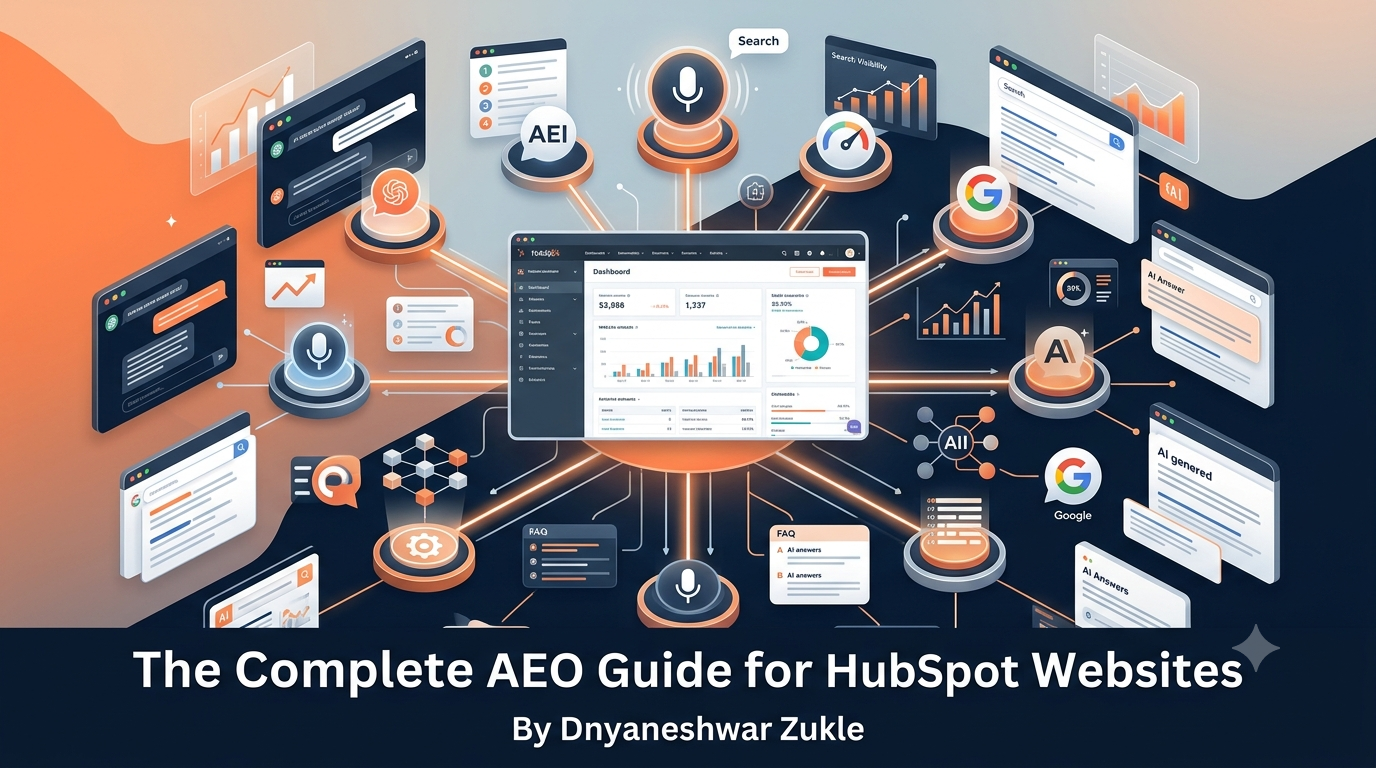
For years, businesses focused on Search Engine Optimization (SEO) to rank higher on Google. Today, users are increasingly getting answers directly from AI-powered tools like ChatGPT, Google's AI Overviews, Gemini, Claude, and Perplexity. Instead of clicking through multiple search results, they simply ask a question and receive an instant answer.
This shift has introduced two important concepts: Answer Engine Optimization (AEO) and Generative Engine Optimization (GEO).
If your HubSpot website is not optimized for these new search experiences, you could miss valuable visibility, traffic, and leads.
In this complete guide, I'll explain how AEO works, why it matters for HubSpot websites, and how you can optimize your content to appear in AI-generated answers.
Answer Engine Optimization (AEO) is the practice of optimizing your website content so that AI assistants, search engines, and voice search platforms can easily understand and present your content as a direct answer to user questions.
Instead of optimizing only for rankings, AEO focuses on becoming the answer.
For example, when someone searches:
"What is HubSpot CMS?"
Google AI Overviews or ChatGPT may provide a summarized answer without requiring users to click a website.
If your content is structured properly, your website can become the source behind that answer.
Generative Engine Optimization (GEO) is the next evolution of SEO.
GEO focuses on helping AI systems understand, trust, and reference your content when generating responses.
Examples of generative engines include:
Unlike traditional search engines that display links, generative engines create original responses using information gathered from trusted sources.
The goal of GEO is to ensure your website becomes one of those trusted sources.
| SEO | AEO | GEO |
|---|---|---|
| Optimizes for search rankings | Optimizes for direct answers | Optimizes for AI-generated responses |
| Focuses on keywords | Focuses on questions and answers | Focuses on authority and context |
| Targets search engines | Targets answer engines | Targets AI platforms |
| Generates clicks | Generates visibility and citations | Generates AI recommendations |
The future of search is not SEO vs AEO.
It is SEO + AEO + GEO working together.
One reason I frequently recommend HubSpot CMS to businesses is its strong technical foundation.
HubSpot websites already include several features that support AEO and GEO:
These technical advantages make it easier for AI systems and search engines to understand your content.
However, simply using HubSpot isn't enough.
You still need the right content strategy.
AI systems typically prioritize content that demonstrates:
Content written by real practitioners and subject matter experts.
Websites with strong credibility and industry recognition.
Accurate, updated, and well-sourced information.
Easy-to-read content that directly answers user questions.
Proper headings, FAQs, lists, tables, and schema markup.
When these elements are present, your content has a better chance of appearing in AI-generated responses.
Most AI interactions begin with a question.
Instead of targeting only keywords, target real questions such as:
Create dedicated sections that answer these questions directly.
FAQ sections are extremely valuable for AEO.
They provide clear question-and-answer formats that AI tools can easily understand.
Example:
HubSpot CMS is a cloud-based content management system designed to help businesses build, manage, and optimize websites without extensive technical expertise.
AEO-friendly content should follow:
Avoid skipping heading levels.
Well-structured content helps AI systems identify the hierarchy of information.
Schema helps search engines understand page content.
Important schema types include:
HubSpot allows developers to implement schema within templates and modules.
Thin content rarely becomes an AI citation source.
Instead of writing 500-word articles, create complete resources that fully answer a topic.
For example:
"HubSpot CMS Guide"
is stronger than
"What is HubSpot CMS?"
because it covers implementation, pricing, benefits, migration, SEO, and best practices.
AI systems trust websites that consistently publish content within a niche.
If your company specializes in HubSpot development, publish content around:
This creates authority signals.
Users increasingly search using natural language.
Instead of:
"HubSpot SEO"
they search:
"How can I improve SEO on my HubSpot website?"
Your content should mirror real conversations.
One of the best GEO strategies is sharing personal expertise.
Include:
AI systems increasingly value first-hand experience.
For example:
In my experience working with HubSpot websites, pages that include FAQs and structured content often gain visibility in AI-generated answers faster than traditional blog posts.
Use:
AI systems prefer content that is easy to extract and summarize.
Fresh content signals reliability.
Review important articles every few months and update:
Updated content is more likely to remain relevant in AI-generated responses.
A strong HubSpot blog should follow:
This structure aligns perfectly with how AI systems consume and present information.
Avoid these mistakes:
These issues reduce the likelihood of being cited by AI systems.
The search landscape is evolving faster than ever.
Businesses that focus only on traditional SEO may struggle as users increasingly rely on AI-generated answers.
The winners will be brands that:
HubSpot provides an excellent foundation, but success ultimately depends on how effectively you create and organize your content.
AEO is no longer optional.
As ChatGPT, Google AI Overviews, Gemini, Claude, and other AI platforms become a primary source of information, businesses must adapt their content strategies accordingly.
For HubSpot websites, the opportunity is significant.
By combining strong SEO fundamentals with Answer Engine Optimization (AEO) and Generative Engine Optimization (GEO), you can increase visibility, improve brand authority, and position your business as a trusted source in the age of AI search.
The future belongs to websites that don't just rank—they answer.
Written by Dnyaneshwar Zukle
HubSpot Developer, SEO Strategist, and Digital Marketing Consultant
When building a website on HubSpot, one of the first decisions you'll face is where to get your theme. Two popular ...
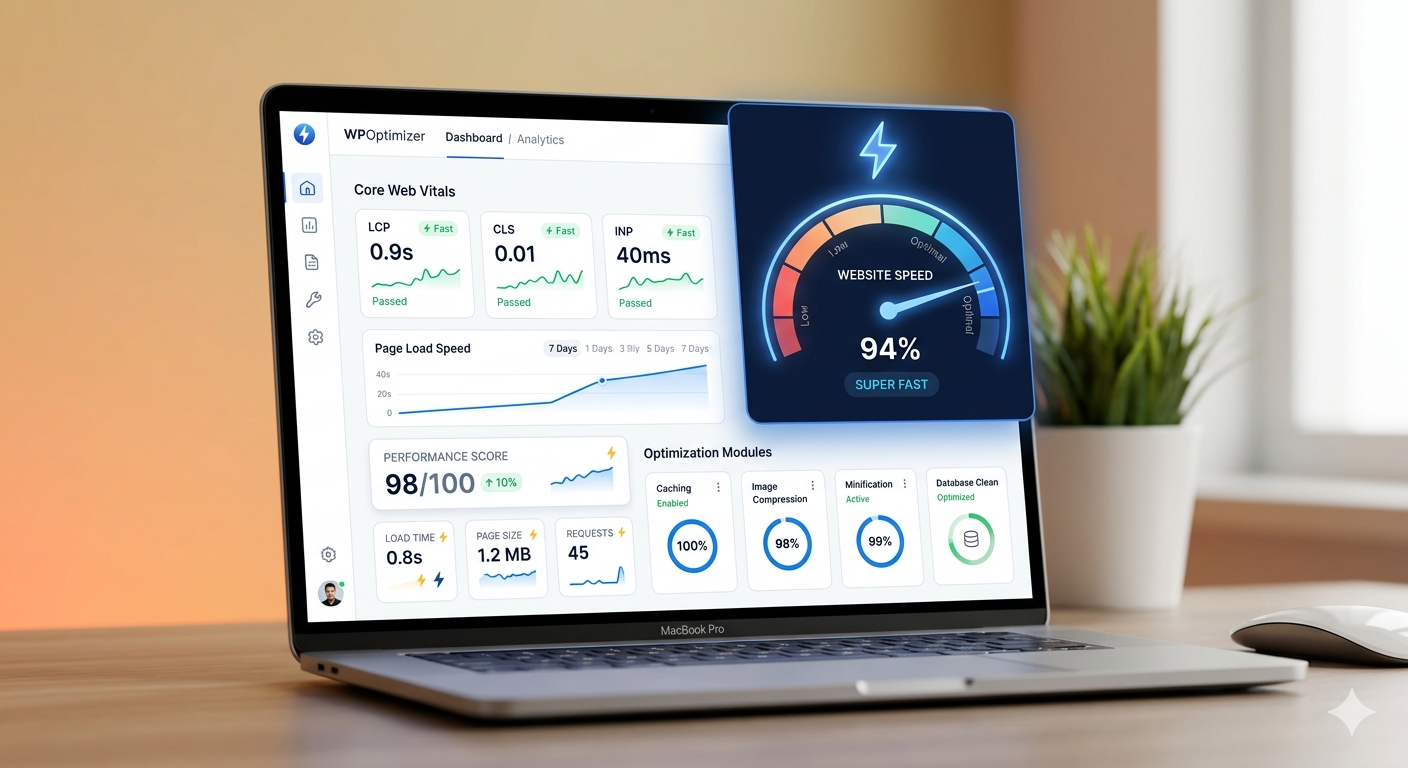
Optimizing a HubSpot website for speed involves improving images, reducing JavaScript, minimizing third-party scripts, ...